Визуализация зависимостей между задачами
In the video, you learned to identify several types of risks. In this reading, we will be discussing the different types of dependencies that can play a critical role in our project’s success.
Types of dependencies
Dependencies are a relationship between two project tasks in which the completion or the initiation of one is reliant on the completion or initiation of the other. Let’s explore four common types of dependencies:
Finish to Start (FS)
In this type of relationship between two tasks, Task A must be completed before Task B can start. This is the most common dependency in project management. It follows the natural progression from one task to another.
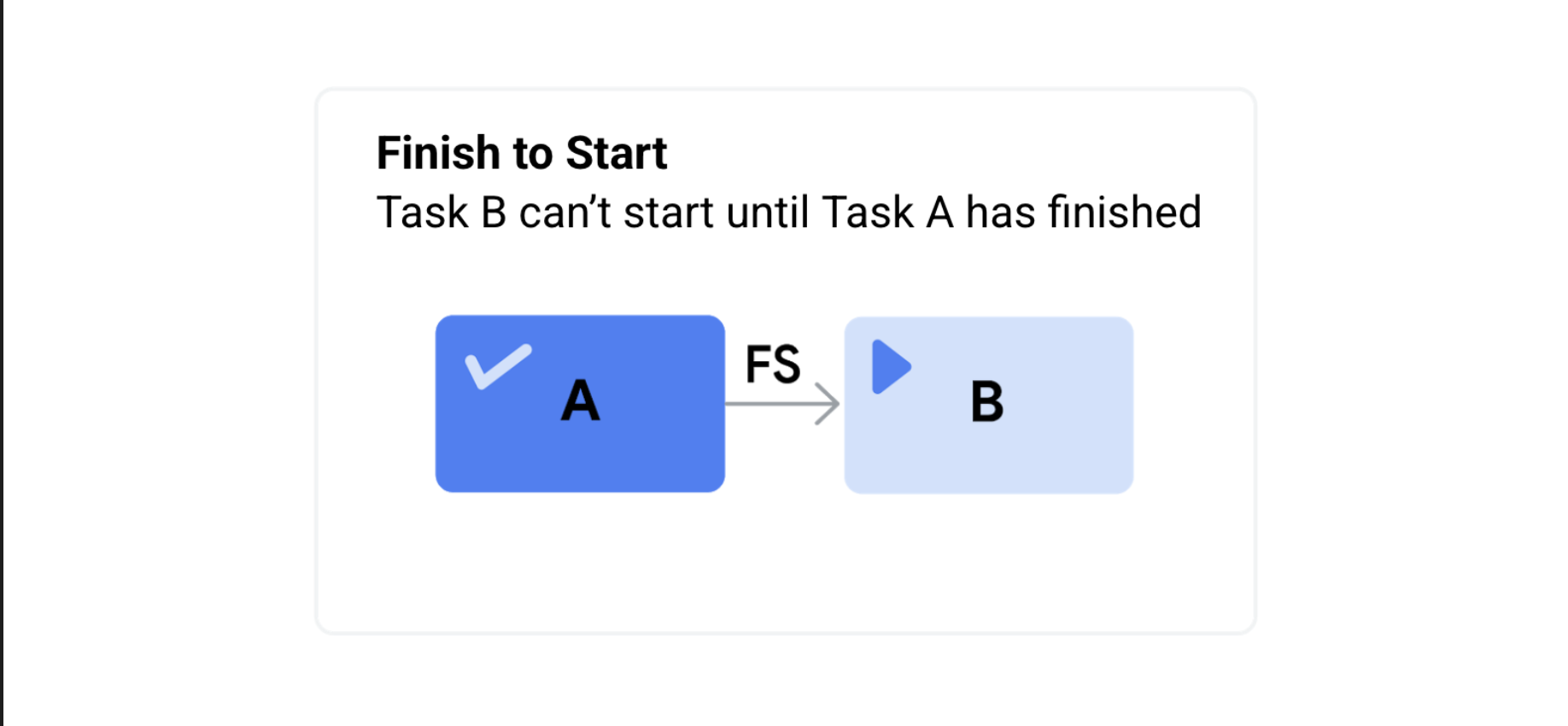
Example: Imagine you are getting ready to have some friends over for dinner. You can’t start putting on your shoes (Task B) until you’ve finished putting on your socks (Task A).
Task A: Finish putting on your socks. →Task B: Start putting on your shoes.
Finish to Finish (FF)
In this model, Task A must finish before Task B can finish. (This type of dependency is not common.)
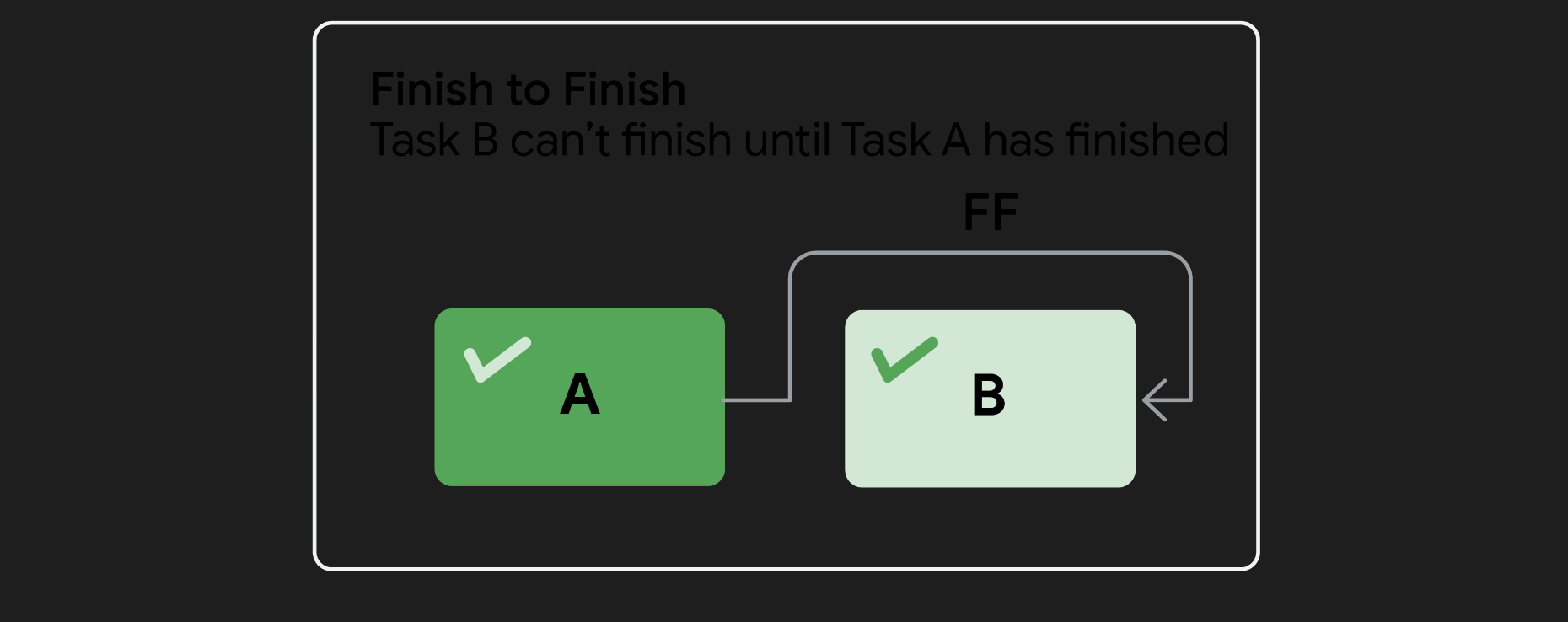
Example: Earlier in the day, you baked a cake. You can’t finish decorating the cake (Task B) until you finish making the icing (Task A).
Task A: Finish making the icing. →Task B: Finish decorating the cake.
Start to Start (SS)
In this model, Task B can’t begin until Task A begins. This means Tasks A and B start at the same time and run in parallel.
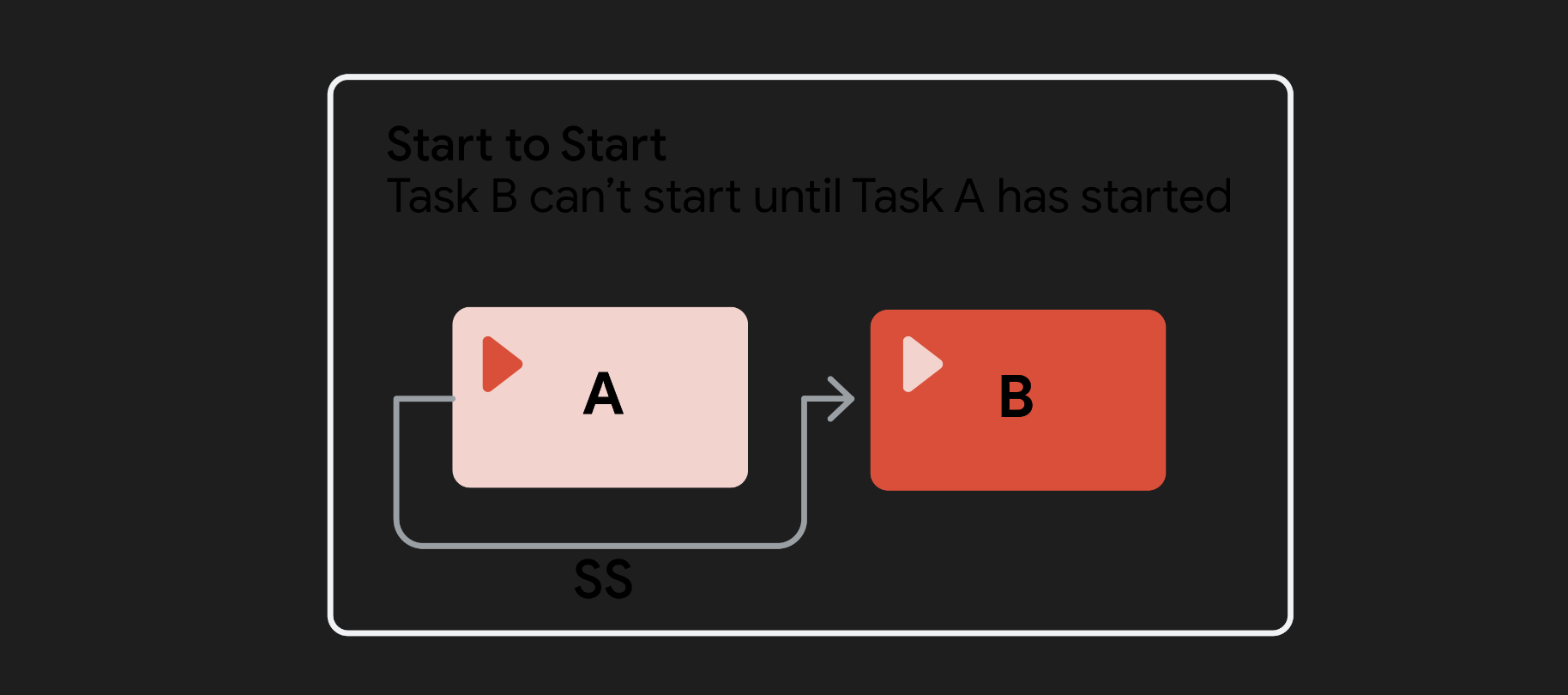
Example: You need to take the train home after work. You can’t get on the train (Task B) until you pay for the train ride (Task A).
Task A: Start by paying for your train ride. →Task B: Start going home by boarding the train.
Start to Finish (SF)
In this model, Task A must begin before Task B can be completed.
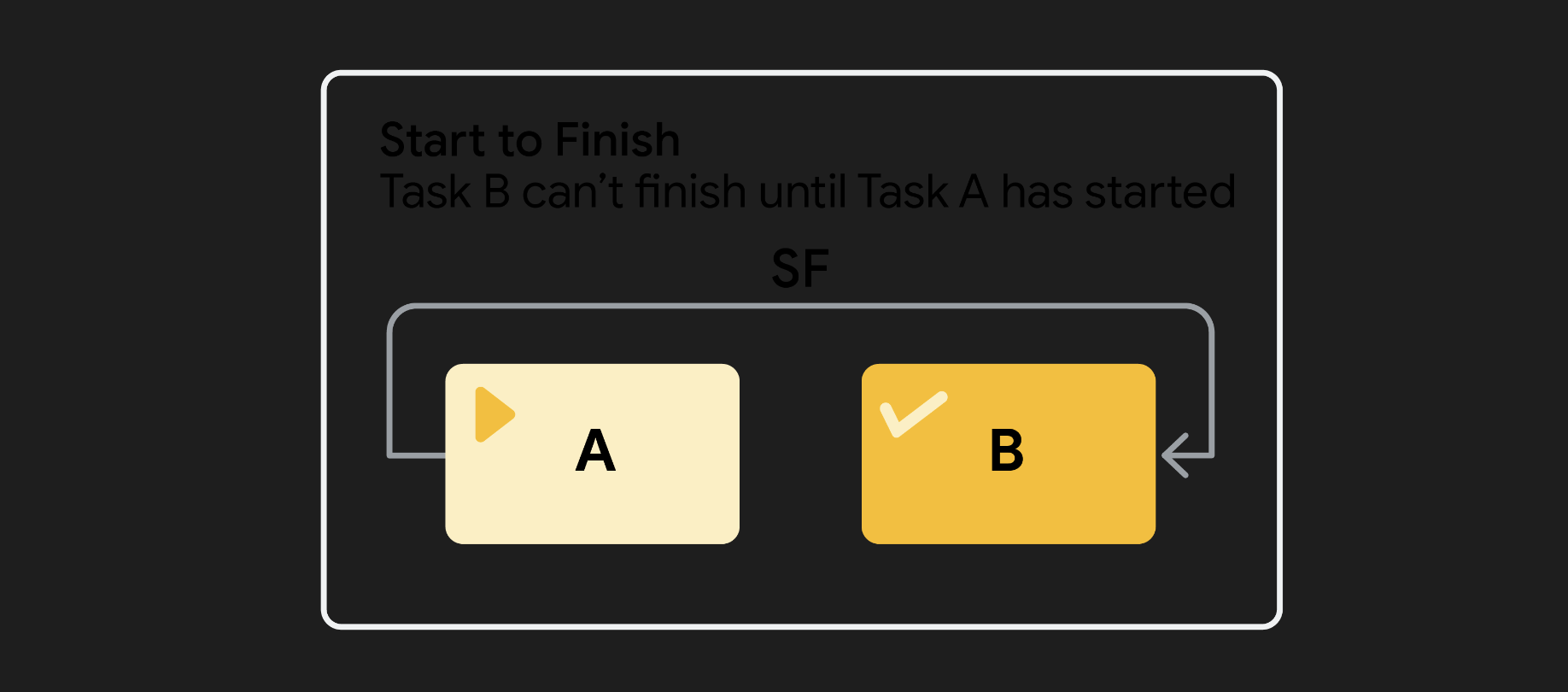
Example: One of your friends calls to tell you he’ll be late. He can’t finish his shift (Task B) and leave work until his coworker arrives to start her shift (Task A).
Task A: Your friend’s coworker starts her shift. →Task B: Your friend finishes his shift.